Waterpark Simulator Money, Cash Flow, and Mafia Loans
Fund payroll and builds from tickets and food—not from habitual emergency borrowing.
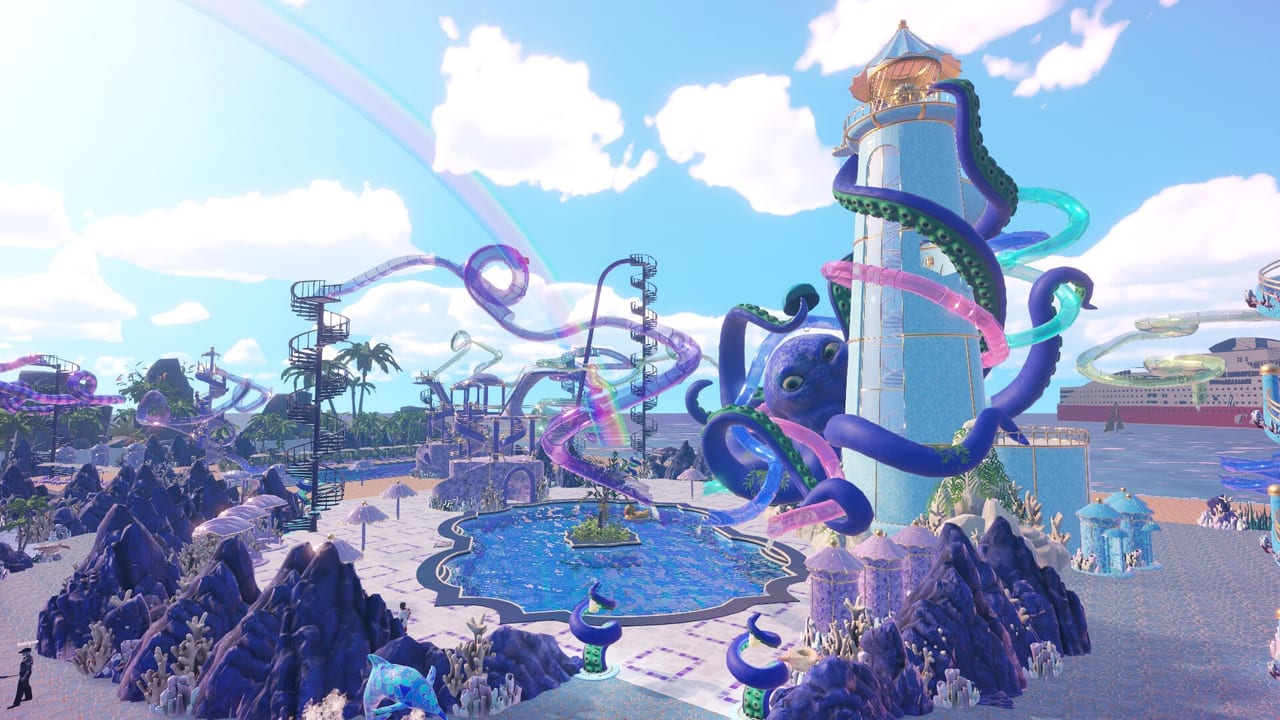
Cash is the scoreboard beneath the stars
Waterpark Simulator by CayPlay Studios looks like a build toy, but payroll, stock, repairs, and expansion all drain the same bank account. Version 1.0 launched July 31, 2026 on Steam, PlayStation 5, and Xbox Series X|S at $12.99, adding online co-op for 2–4 players, the Beach map, optional night mode with overtime, diamond rating, security, mascots, Ocean / Aztec / Pirate themes, and Mafia loans as emergency funding when you are short. This guide explains where money comes from, when not to expand, how loans hurt more than they help if you rely on them, and how night overtime and Beach sprawl interact with a healthy buffer.
Start with Tickets and Cheaters if income leaks at the gate, Food Concessions if counters sit empty, and Version 1.0 for the full launch feature map.
Early income: tickets plus food
Your first reliable revenue stack is ticket sales and food concessions.
Tickets pay best when age categories and slide passes are correct every sale. Bracelet cheaters and wrong passes look like busy parks with empty registers—fix the gate before you blame the economy. Deep booth tactics live in Tickets and Cheaters and Getting Started.
Food turns traffic into spendable cash. Restock hot dogs and lemonade before open, place stands near the entrance loop, and honor toppings so lines do not stall. Empty counters during peak hours are silent budget killers; vendor assignment problems masquerade as “no money” when the real issue is an Unattended plaque. See Food Concessions and Vendor Fix.
Research points and star objectives sometimes push revenue targets. Treat food and tickets as linked systems: flyers that pull guests without stock or correct passes create complaint debt, not profit.
When not to expand
Expansion feels like progress because new pools and slides are visible. Financially, expansion is a bet that your operations can serve more guests without more failures.
Do not expand when:
- Daytime cleanliness already slips whenever you build
- Food stands empty mid-afternoon while you place decor
- You personally mop every puddle because cleaners are missing or misassigned
- Ticket mistakes or cheaters are still common at the gate
- Payroll needs a loan to survive a normal week
A second pool, a Beach district, or a custom slide tower before gate and cleaning loops stabilize multiplies walking distance, rescue risk, and trash volume without adding proportional income. Beach Map Zones is a reward for parks that can travel—not a bailout for parks that cannot restock lunch.
Finish the visible star row in Stars and Diamond Rating before you chase diamond decor if cash is tight. Throughput upgrades from Upgrades Priority often beat another landmark on thin margins.
Mafia loans: emergency cash with real cost and risk
1.0 adds Mafia loans when funds run short. The UI presents them as fast cash for a painful price. CayPlay has not published a fixed interest table that survives every patch, and this wiki will not invent exact APR numbers. Assume the cost is deliberately harsh: loans are emergency leverage, not a staffing plan, not a Beach expansion budget, and not a substitute for fixing empty food or bracelet leaks.
Reasonable loan use looks like: payroll is genuinely at risk tonight, you know which income leak caused it, and you have a same-week plan to stop borrowing again. Bad loan use looks like: habitual borrowing to fund mascots, theme sprees, or night overtime on a park that already loses money by noon.
If you take a loan, fix the leak the same week—wrong tickets, idle vendors, seagull mess, graffiti downtime, or unassigned security. Cross-check Hiring Guide so new wages do not turn one loan into a monthly dependency.
Mafia pushback after patch 1.0.43\n\nPatch 1.0.43 makes physical comedy with collectors riskier: the Mafia can fight back when attacked during their event, and wave timing is more random if you have offended them. Treat loans as paperwork and cash planning—not a boxing match. If collectors and Saboteur guests overlap on a busy day, prioritize pool plugs via Saboteurs and disengage from Mafia brawls; full bullets sit on Patch 1.0.43.\n\n## Night overtime versus loans
Night mode extends hours with staff overtime. Overtime is a spending lever, not free atmosphere. Before you toggle night, count who stays on shift—Ticket Agents, vendors, cleaners, security, lifeguard-style coverage, mascots—and decide who clocks out first. Mascots are often the first cut when cash is tight.
A profitable short evening beats an all-night slog that empties the bank. Night overtime and Mafia loans stack badly: you pay wages and carry debt because darkness hid puddles, cheaters, and empty stands. Read Night Mode and Weather before you fund night with borrowed cash.
Beach expansion cash buffers
The Beach map stretches every chore route. Security, food restock, and mop paths that worked on the starter lot become long sprints. Keep a cash buffer equal to several days of wages plus food stock and repair reserves before you unlock Beach sprawl.
Beach income can rise with capacity, but only if bins, lifeguard sightlines, and gate accuracy scale with the footprint. Expand one district at a time; duplicate critical staff rather than assuming one hero employee covers the shoreline and the inland slide tower.
EA Duck Slide, diamonds, and cosmetic discipline
Early Access owners received an exclusive Duck Slide at 1.0—a cosmetic thank-you, not a cash printer. Post-launch buyers should not treat the Duck Slide or any single attraction as an economy cheat code. Slides create demand; they do not replace ticket discipline or food throughput.
Diamond spending tempts theme shopping once prestige opens. Ocean, Aztec, and Pirate props are powerful for identity and quests, but decor without operations is how parks look screenshot-ready and go bankrupt. Spend diamonds and cash on bottlenecks you felt today—cleaning, repair, gate accuracy, assigned vendors—before vanity courtyards. Stars and Diamond Rating and Review: Worth Buying frame the long game without pretending cosmetics pay wages.
Money checklist
- Confirm ticket age and slide pass accuracy at open
- Restock food before the first flyer wave
- Keep several days of wage buffer before each hire or Beach unlock
- Expand only when daytime ops stay green without you micromanaging every mop
- Use night overtime briefly on stable days—not to mask failing noon loops
- Treat Mafia loans as one-time rescue with a same-week fix plan
- Prioritize throughput upgrades over landmark ego when stars stall
- Cut mascots and optional roles before borrowing for payroll
- Audit cheaters and idle vendors when the register disagrees with guest count
- Return to Guides Hub once cash trends up for three boring park days
Healthy Waterpark Simulator economies feel boring: correct tickets, full food lines, filled trash bags, and a bank balance that survives overtime. Loans and night spectacle are tools for parks that already know where the money comes from.
Frequently Asked Questions
Quick answers to the most common questions.
What are the main income sources early on?
Correct ticket sales—including age category and slide pass—and restocked food concessions on the entrance loop. Fix gate leaks before blaming low cash.
When should I avoid expanding the park?
When cleanliness, food stock, or ticket accuracy already fail during normal daytime hours. Expansion multiplies mess and distance without fixing income leaks.
Are Mafia loans safe to use often?
No. Treat them as expensive emergency cash with real repayment pressure—not a routine budget tool. Exact costs can change with patches; assume they hurt.
Is night mode a good way to earn money?
Only when daytime ops are stable. Overtime wages rise; dark hours hide cheaters and puddles. Short profitable evenings beat all-night borrowing spirals.
Does the EA Duck Slide print money?
No. It is an Early Access cosmetic thank-you. Income still comes from tickets, food, and well-run attractions—not from owning a specific slide skin.
How much cash should I keep before Beach expansion?
A buffer of several days of wages plus stock and repair reserves. Beach distances make emergencies expensive; expand when ops, not loans, fund the next district.
Did Mafia behavior change in patch 1.0.43?
Yes. Mafia can fight back when attacked during their event, and offended parks see more random wave timing—pay down leverage instead of brawling.