Waterpark Simulator The Cleaning Loop That Saves Your Rating
Bins, bags, mops, and puddles—run hygiene like a production line.
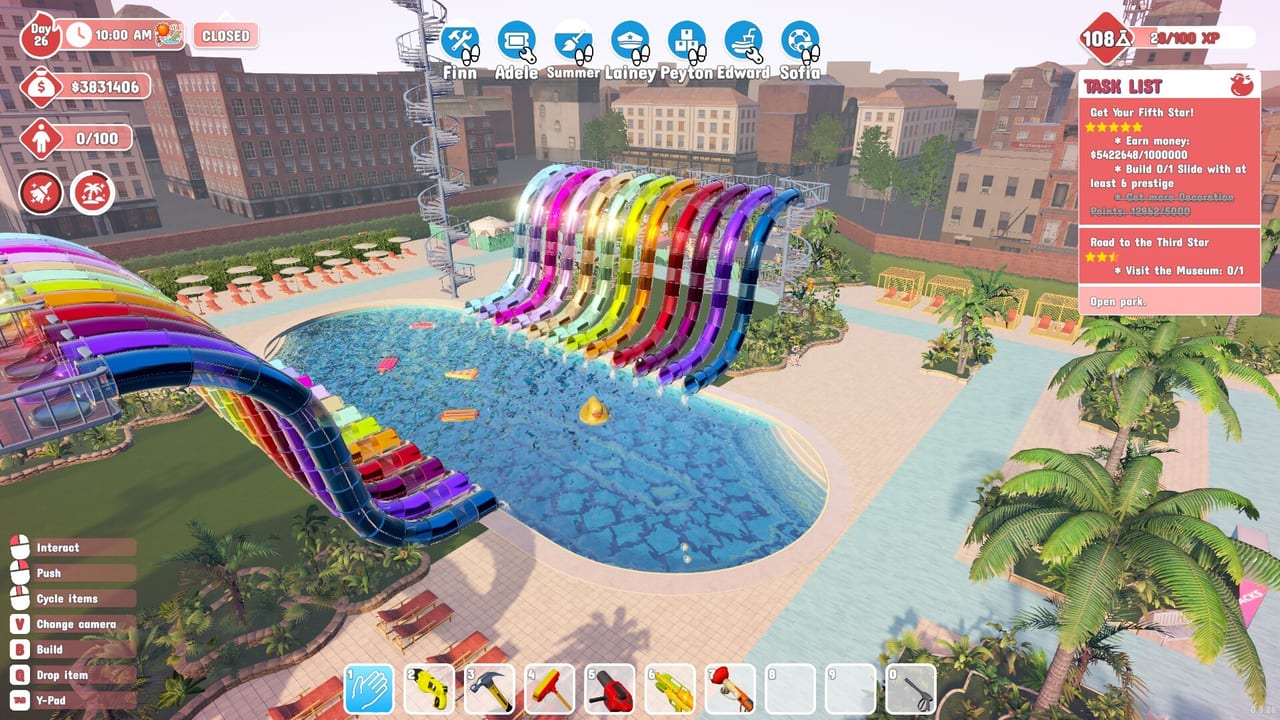
Clean parks are playable parks
Waterpark Simulator’s comedy is wet floors and flying ragdolls. Its failure state is the same footage with one-star reviews. Cleaning is not a side activity you squeeze between building sessions; it is the loop that protects ticket income, research chores, and every prestige objective in Stars and Diamond Rating.
This page covers bin placement, trash bag economy, puddle control, tool choices, pool disasters, and how to finish trash-focused missions quickly. It matches the 1.0 (July 31, 2026) game from CayPlay Studios on Steam, PS5, and Xbox Series X|S at $12.99, including busier co-op parks and optional night overtime that can multiply mess if you are not ready.
Trash bins: arrow, coverage, traffic
When you place a bin, watch two teaching aids the tutorial under-explains:
- Direction arrow — guests approach from this facing. Point it at the path, not at a wall, slide skirt, or decorative prop.
- Yellow coverage — guests outside this radius will not bother walking to the can. Overlap coverage on queues, pool exits, food lines, and lounge clusters.
A bin behind a statue “exists” and still fails. If litter complaints cluster in one corner, fix facing and coverage before you hire a second cleaner. Layout mistakes create infinite walking; payroll cannot delete distance.
Upgrade toward modern bins through Research Points when cleanliness quests or litter volume outgrow starter cans.
Trash bags: fill before you toss
Trash bags cost money. The core economy tip—also the spirit of fast trash mission play—is to fill each bag completely before you dispose of it. Partial bags burn supply budget and add extra trips. Buy bags, swap to hands when needed, pick litter along a planned route, then throw full bags into disposal with the aimed throw control (right mouse on PC—see PC Controls).
For objective days that demand a high trash count quickly, pre-place coverage so litter spawns where your route already walks, carry bag capacity upgrades when researched, and avoid zigzag decoration tours. Mission speed comes from route design and full bags, not panic sprints through empty corners.
Puddles, mops, and ragdoll tax
Puddles appear constantly around pools, showers, and splash exits. Guests slip, stack into ragdoll piles, and broadcast neglect. Equip the mop and hold the interact/clean input to clear water. Keep the mop accessible via pocket upgrades so you are not opening inventory during a slip chain.
Quick Dry research reduces puddle pressure later. Until then, schedule mop laps after each rush wave: gate check → food glance → pool deck mop → bin empties → repeat. Toilets and extra pools multiply wet zones; unlock comfort buildings only when you can add them to the lap.
Water gun versus mop
The water gun is excellent for speed cleaning and for dealing with smelly guests. It can outperform the mop on raw clear time and doubles as crowd flavor. The tradeoff: water-gun cleaning does not feed research the way mopping can. Early game, prefer the mop when you still need Floor Tool, bins, or hiring unlocks. Mid game, keep both—gun for emergencies, mop for point-positive maintenance.
Special messes and troublemakers
Devil-icon guests may litter aggressively, foul pools, or steal stock. Eject them early with push/glove tools from the gate toolkit described in Getting Started. Graffiti and bird-related messes appear in longer saves; treat them as scheduled clean tasks, not surprises you discover after reviews tank.
Pool “presents” and cracked basins are hygiene and safety failures together. Scoop problems promptly, hammer cracks, and refill plugs after repairs so guests do not dive into empty shells. Unrescued serious injuries call ambulances and charge fees—another reason life rings belong in the cleaning/safety kit, not in a forgotten crate.
Staff cleaners without layout lies
Hire cleaners when mopping steals every research minute, not the moment the role unlocks. Janitorial staff help most when bins face correctly and supply closets sit near wet zones. If a cleaner patrols forever between distant messes, rebuild the path. Remember staff chores grant fewer research points than your own work—balance automation with personal mop sessions when unlocks are urgent (Research Points).
Night mode overtime keeps the park open into glowing hours. Beautiful screenshots, heavier payroll, and more hours for puddles to exist. Only extend the day when cleaner coverage or a co-op mop buddy is real.
Co-op cleaning roles
In 2–4 player sessions, assign a dedicated hygiene player during peak, or split zones (gate deck vs back pools). Two players mopping the same puddle while litter spreads elsewhere is wasted motion. Share the bag economy rule: full bags only. Coordinate with Multiplayer Co-op so builders do not open a new splash pad without bin coverage.
A repeatable cleaning loop
- Before open: empty leftover litter, confirm bin facing, stock bags, place spare life rings in pools
- Open + short flyer run only if demand is wanted
- After first admissions: mop entrance splash and food queue wet spots
- Mid morning: full bag route through high-traffic coverage circles
- Peak: eject troublemakers, answer drown alerts, mop slip clusters immediately
- Afternoon: repairs and plug refills, science icon pickups on the walk
- Pre-close or pre-night: reset bags, recheck bins near new builds, decide if overtime is affordable
Linked reading
- Opening habits and cheaters: Getting Started
- Spending unlocks that shrink this loop: Research Points
- Why cleanliness quests block prestige: Stars and Diamond Rating
- Bindings for mop, throw, and push: Controls Hub
Master the cleaning loop and every other guide gets easier. Ignore it and custom slides on the Beach map are just longer walks between disasters.
Frequently Asked Questions
Quick answers to the most common questions.
Why won’t guests use my trash cans?
Check the placement arrow facing their approach path and make sure the yellow coverage overlaps real traffic. Bins facing walls or decorations are often ignored.
How do I finish trash missions faster?
Fill each trash bag completely before disposing, route through dense litter coverage, and upgrade bag capacity or bins so you spend less time traveling empty-handed.
Should I mop or use the water gun?
Mop when you need research points. Use the water gun when you need speed or smelly-guest control and can afford to miss research from that cleanup.
Why do guests keep slipping?
Puddles on pool decks and paths cause ragdoll slips. Clear them quickly and research Quick Dry later to reduce how often they appear.
Do cleaners replace the player entirely?
They reduce pressure, but poor bin layout still fails, and staff chores usually earn less research than manual cleaning.
What happens if I repair a pool and forget water?
Guests may still jump into an empty basin, causing injuries and possible ambulance fees. Refill the plug after repairs.